
Life is a Mixtape

Long before Spotify playlists, I was making mixtapes. I spent hours splicing songs together on cassette, then burning CDRs with handwritten track lists. It wasn't just about which songs to include—it was about the order and the flow, how one track handed off to the next. I didn't know it then, but I was learning something about how music moves through time.
In college, I studied poetry and wrote songs constantly. I had verses and hooks and whole narratives set to rhythms I could hear in my head but couldn't play. I never learned an instrument and I couldn't sing, so I had all these words with no way to bring them to life.
Then I discovered deejaying. I started as a fraternity DJ, which mostly meant playing what people wanted to hear and learning to read a room fast. But once I understood what a mixer could do, everything changed. I didn't need to play an instrument because the turntables were the instrument. I could blend and build and extend and reshape. Eventually I started producing remixes, then original tracks. For years, that was the path—club nights and private events and whatever room would have me. I got serious. I got good. I thought this was what I was supposed to become.
Then I turned thirty and I took a long hard look at my life trajectory. I had a newborn child and a wife who believed in me, but I realized, I was chasing something that might never arrive. So I made a decision, and it wasn't a soft one. I sold the decks and the gear and everything that connected me to that world. I wasn't pressing pause. I was walking away. I told myself I would never go back.
I poured those hours into building something else—seventy and eighty hours a week into a business that could actually provide. And it did. I built something real that gave my family security and freedom and proof that the sacrifice meant something. But the part of me that made music didn't disappear. It just went silent.
When Spotify came along, I became the playlist guy. Curating and sequencing and finding the thread between songs. The same instinct I'd had with deejaying, just without the gear or the hours. It was a way to stay close without pulling me away from my family or the business. And for a long time, that was enough.
I'm also a lyrics guy. Always have been. What we listen to fills our minds—what goes in comes out. I've watched people absorb music without ever noticing what it's depositing in them, never thinking about what ideas and attitudes and stories they're letting take root. The words matter because the words we repeat become the thoughts we carry.
So when I finally came back to production, I came back with something clear. Every lyric I write is conscious, every word chosen for this moment—for the shift that's underway and for the people who are ready to hear something true.
A New Era
When AI music tools first emerged, I paid attention, but they weren't ready. Not for someone who knew what production actually required. I needed to be able to iterate and tinker and push through a hundred versions before something was right. So I waited...
Until now. Today, I believe we are living through one of the great shifts in how music gets made. I think about how people have always loved to consume music (mixtapes and burned CDs and playlists). There's something deep in us that loves curation, loves the act of gathering songs that belong together and sharing them with others. That impulse isn't new. It's ancient.
And I think about how songs have always come into the world. A songwriter hears something in their head and writes it down, then goes searching for the voice that can carry it. The greatest producers in history spent years finding the right person to bring their music to life.
That search is over.
For the first time in human history, a songwriter can go straight from their heart, to the production, to the world. No auditions, no compromises, no waiting to find the voice that matches what you hear inside. You can bring it all the way home yourself. I wrote songs in college that had nowhere to go because I couldn't sing and couldn't play. Those songs sat in notebooks for decades. Now, I can hear something in my head and follow it all the way through to a finished piece of music—the vocals I imagined but couldn't perform, the arrangements I heard but couldn't execute. All of it is possible now.
This is the door I was waiting for my whole life. I just didn't know it existed. Until now.
Subscribe to The Signal
For the ones who are listening.

Thin Veil Records
The name comes from an old idea that shows up across traditions and centuries. In scripture, the veil was what separated the holy of holies from the rest of the temple—the thin barrier between the ordinary world and the presence of the divine. When that veil tore, it meant access. It meant the separation was never as solid as it seemed. Celtic Christians spoke of "thin places" where the boundary between heaven and earth grew permeable, where something sacred could slip through into the everyday. The phrase has carried forward because people keep recognizing the experience it points to—those moments when the membrane between what we see and what we sense becomes almost transparent.
Music has always been one of those thin places.
A song can reach past the defenses that words alone cannot breach. It can carry truth into the body before the mind has a chance to argue with it. The right melody at the right moment can crack something open that years of thinking never touched. This isn't metaphor. Anyone who has ever been undone by a piece of music knows exactly what I mean.
That's what this label is built around. Every artist here is working in that space where the seen meets the unseen, where sound becomes a carrier for something that resists being named directly. The music doesn't explain the shift that's underway—it lets you feel it. It doesn't argue for a different way of being—it invites you into one, three minutes at a time.
Human-driven music for a new era.
Every artist on this label works the same way: the human is in the room making the calls, and the tools serve the vision. The intention behind each lyric, each arrangement, each sonic choice comes from a person who has felt what they're pointing toward. The technology opens doors that weren't open before, but what walks through those doors is still unmistakably human.
The veil is thin. The music is how we meet there.
The Roster

Trevor and Leah are the voices of this project, and their vocals carry the music from isolation toward recognition, from fragmentation toward unity. Their debut album accompanies the book, but The Silent Architects is much larger than any single release. This is the sound of the signal becoming audible.
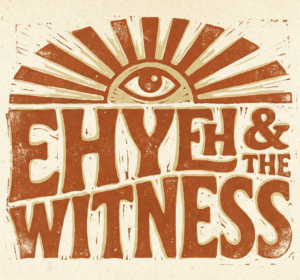
Roots reggae sits at the foundation, but the music refuses to stay in one lane. The sound is warm and weathered, the kind of music that feels like it's been lived in—old soul energy channeled through modern production. Ehyeh means "I Am," the name God gave when asked for a name. The Witness is what remains when the noise falls away. This is music for presence meeting itself.

TJ builds albums the way some people build cathedrals—EDM, progressive house, techno, big room—stacking genres into structures meant to take you somewhere specific. Each album is a direct translation of a personal psychedelic journey. Not songs inspired by those experiences—sonic reconstructions of them. The lyrics carry the knowing. The production carries the feeling. Track by track, the albums follow the arc of the vision itself, beginning to end.